Welcome to Acceleration LLC.

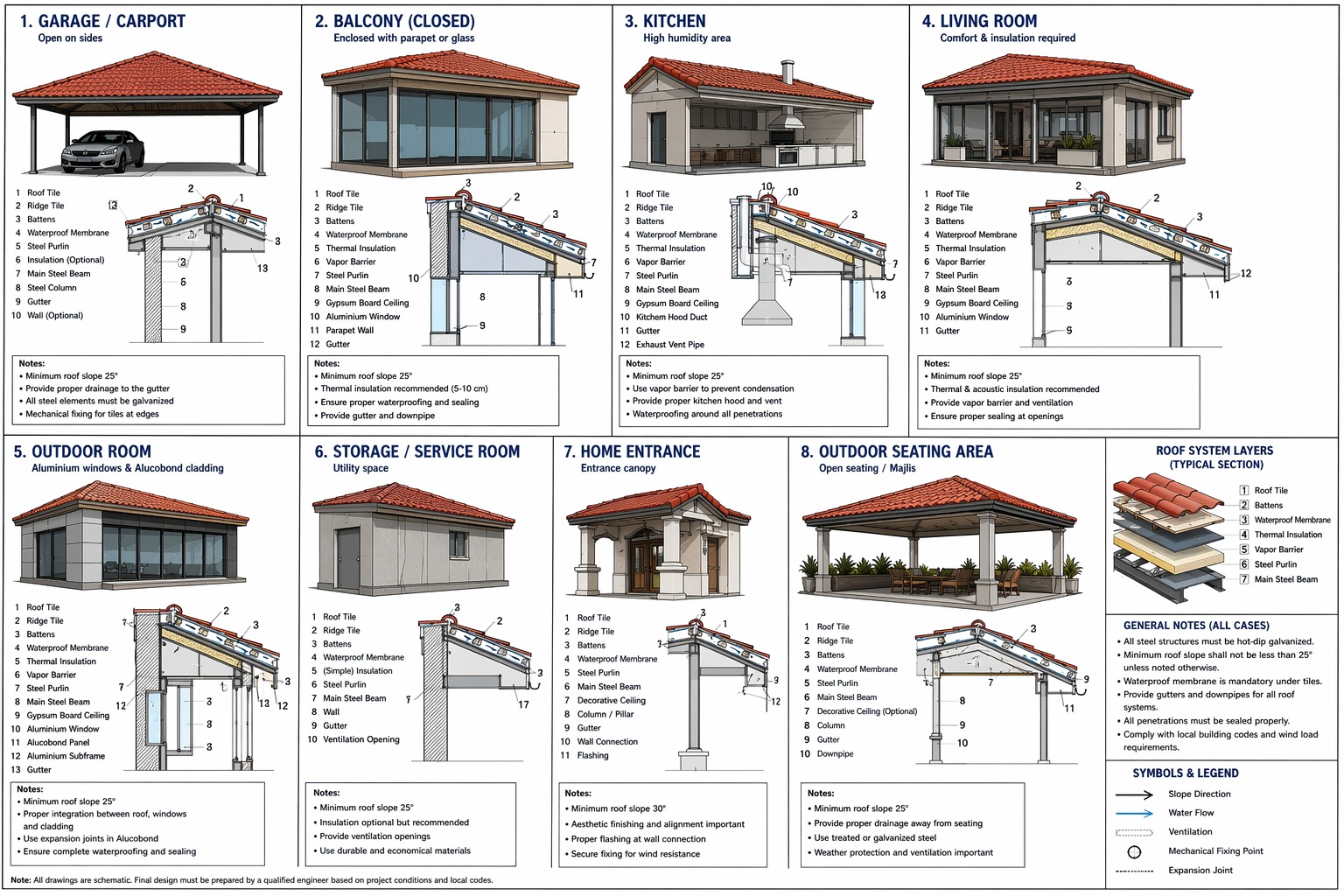
Tiles Uses

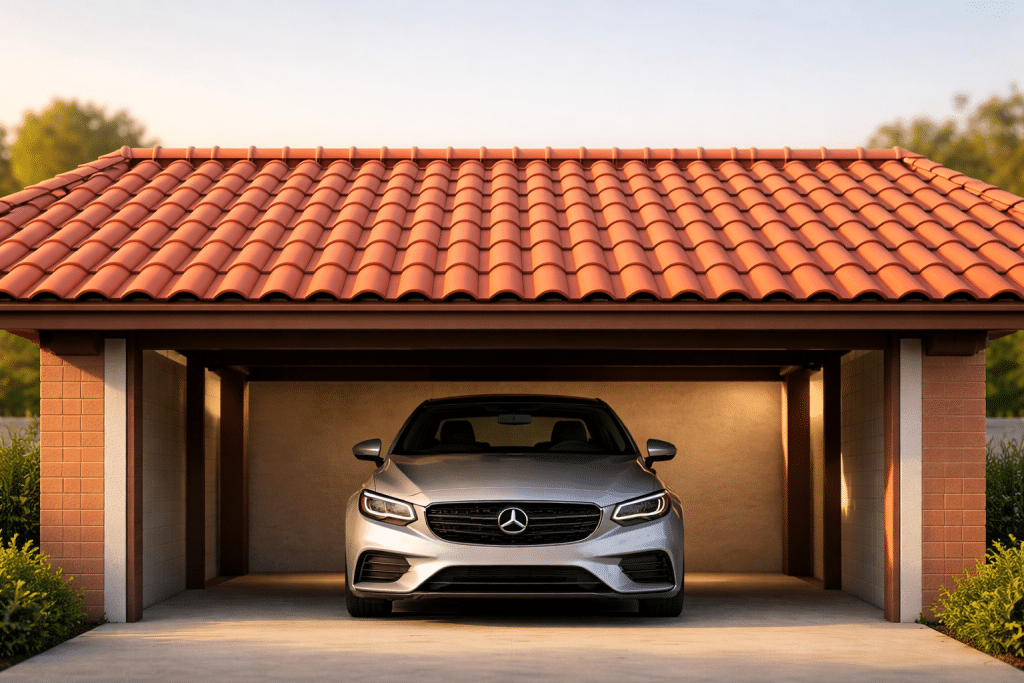
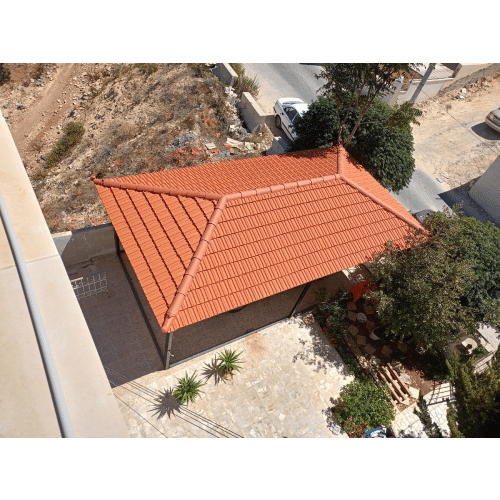
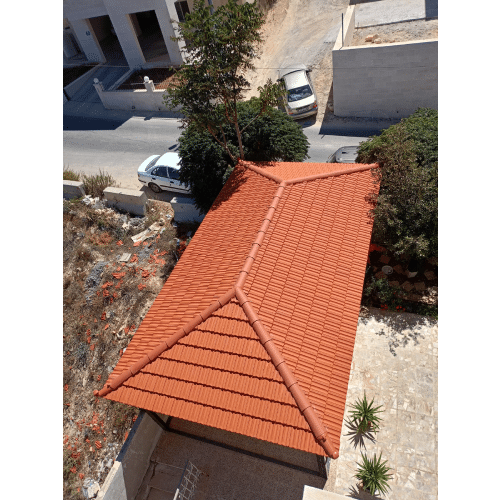
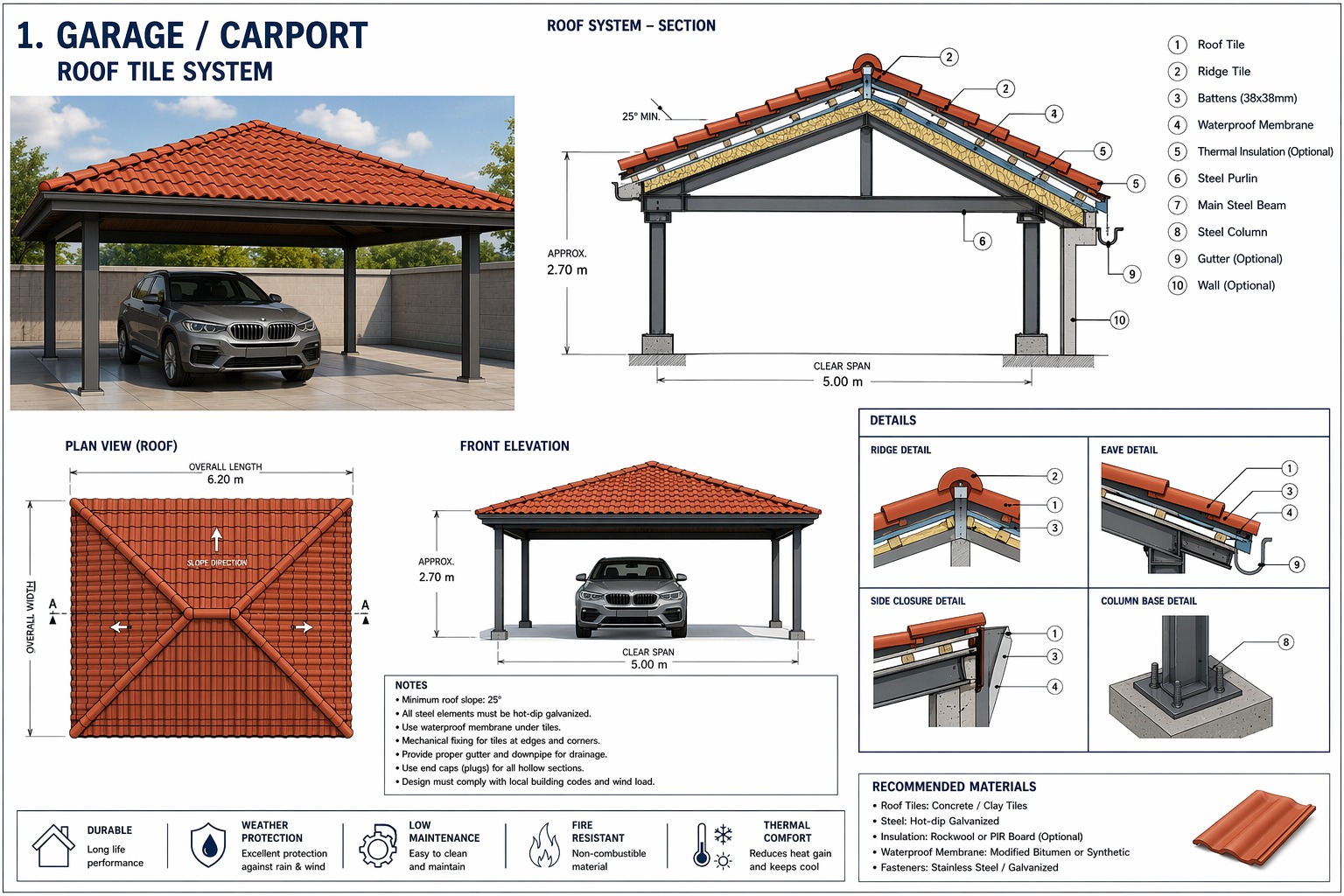
Car garage

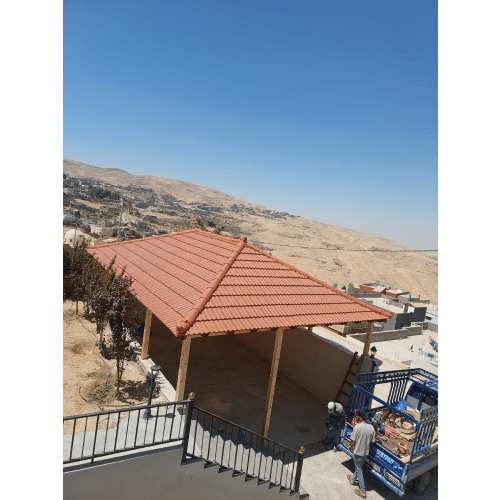
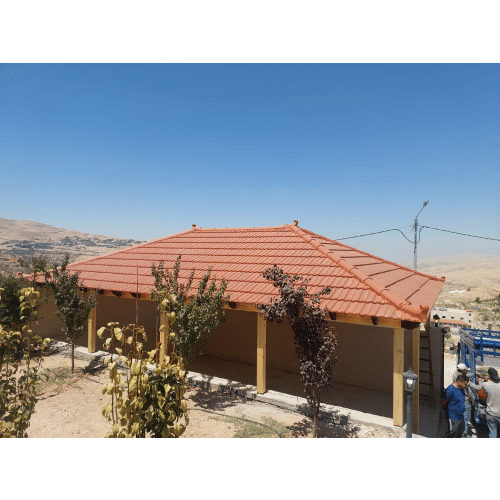
Realistic usage photos

Installation Tips (Critical for Contractors)

  • Always install waterproof layer before battens
  • Use treated wooden battens or galvanized steel battens
  • Use treated (galvanized or anti-corrosion) hollow steel tubes (tubes) for the structure
  • Fix tiles mechanically in windy areas (screws or clips)

Ensure:

  • Proper alignment
  • Overlapping according to manufacturer specs
  • Install ridge caps and side closures properly
  • Add gutters (recommended) to avoid water splash
  • Use end caps (plugs) for hollow tubes to prevent water, dust, and insects, and to protect steel from internal corrosion

Open balcony

Realistic usage photos

💧 Gutters

  • It is recommended to use high-quality aluminum or galvanized gutters for corrosion resistance
  • Gutters must be sized properly according to roof water load and rainfall intensity
  • Install with correct slope to ensure smooth water drainage without standing water
  • It is recommended to add leaf guards to reduce clogging and maintenance


🧱 Roof Tile Type

  • Best option is high-density clay roof tiles for durability and long-term performance
  • Prefer tiles with a strong interlocking system to prevent water leakage
  • Dark colors suit modern designs, while earthy tones suit classical architecture
  • Ensure tiles are weather-resistant and capable of thermal expansion handling


🌲 Roof Timber (if used)

  • Use treated timber resistant to moisture and insects
  • Recommended types:
    • Treated pine wood
    • Heat-treated or engineered timber
  • Must be properly isolated from moisture using waterproof layers
  • For exterior applications, it is preferable to replace timber with a galvanized steel structure for higher durability and lifespan


🛠️ Installation Tips 

  • Always install waterproof layer before battens
  • Use treated wooden battens or galvanized steel battens
  • Use treated (anti-corrosion) hollow steel tubes for structural framing
  • Fix tiles mechanically in windy areas (screws or clips)
  • Ensure proper alignment and correct overlapping according to manufacturer specifications
  • Install ridge caps and side closures properly for sealing and aesthetics
  • Add gutters to ensure proper water drainage
  • Use end caps (plugs) for hollow steel tubes to prevent water, dust, insects, and internal corrosion

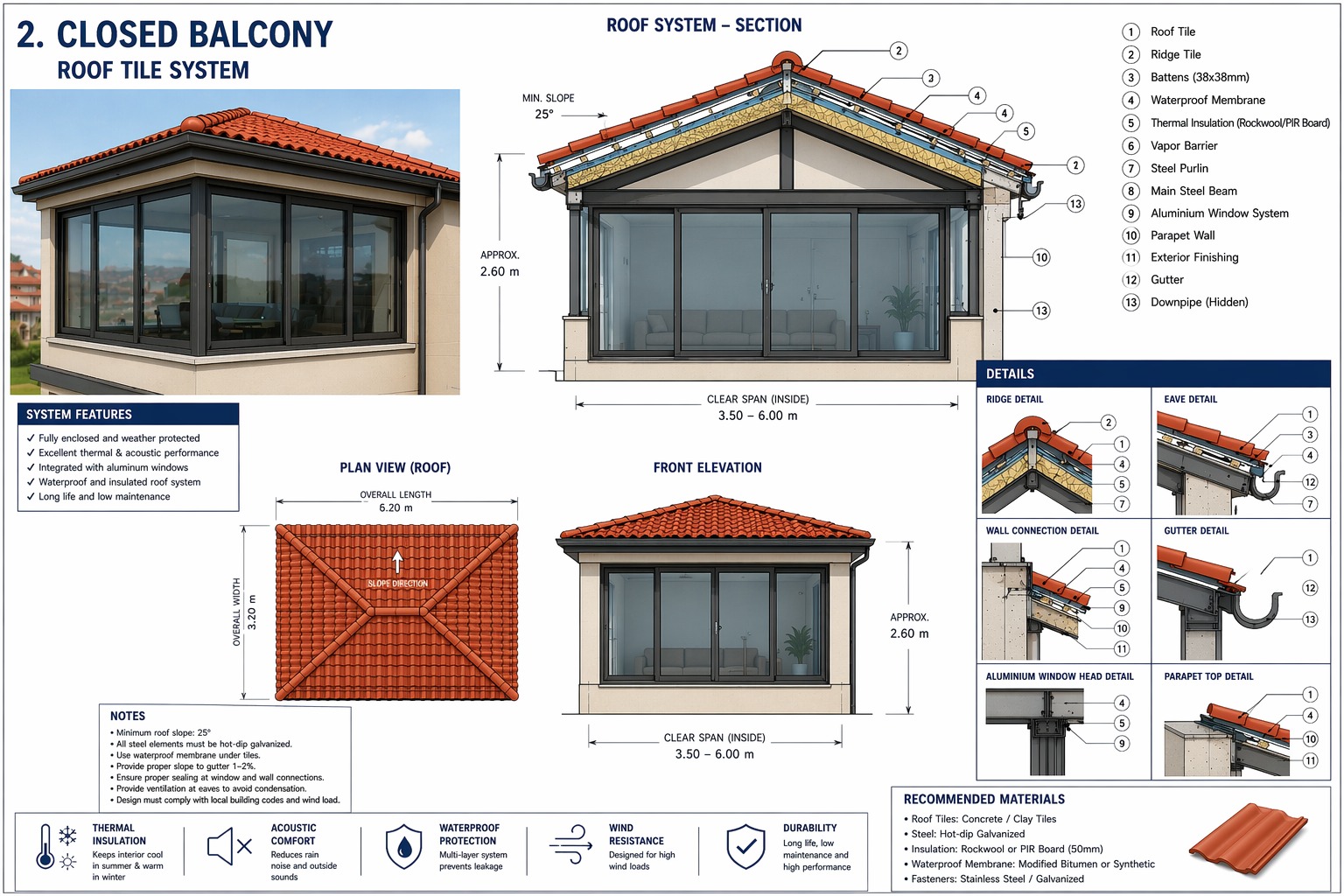
Closed balcony

Realistic usage photos

🛠️ Installation Tips 


🔩 1 Steel Structure Installation

  • Ensure full leveling before any roofing work
  • All steel must be:
    • Galvanized OR painted with anti-rust system
  • Use treated hollow tubes with end caps (plugs) to prevent:
    • Water entry
    • Rust formation
    • Insect accumulation


🧱 2 Waterproofing System

  • Waterproofing layer must be installed before battens
  • Overlaps must follow manufacturer specs
  • All joints must be sealed properly

✔ Critical point:
Any failure here = future leakage inside closed balcony


🪵 3 Battens Installation

Use:

  • Treated timber OR galvanized steel battens
  • Must be aligned perfectly with slope
  • Fixed securely to avoid vibration noise


🧱 4 Roof Tile Installation

  • Fix tiles mechanically:
    • Screws or clips (mandatory in exposed areas)
  • Ensure:
    • Correct overlap system
    • No gaps between tiles
    • Proper alignment in all rows

✔ Edge zones:

  • Increase fixing density (wind resistance zones)


🪟 5 Aluminum Windows & Doors Installation

Correct sequence:

  1. Structural completion
  2. Waterproofing completion
  3. Roof installation
  4. Aluminum installation


Critical points:

  • Use flashing between roof and aluminum frame
  • Apply:
    • PU sealant (weather resistant)
    • EPDM sealing tape
  • Avoid direct contact steel ↔ aluminum without insulation layer

✔ Goal:
Zero leakage at roof-wall junction


💧 6 Gutters Installation

  • Install after roof completion
  • Ensure:
    • Correct slope
    • Strong fixation points
    • No reverse slope (very common mistake)

✔ Add:

  • Leaf guard system (recommended)


🔥 Common Mistakes (Very Important)

  • ❌ Installing aluminum before waterproofing
  • ❌ No flashing between roof and windows
  • ❌ Using untreated steel or wood
  • ❌ Weak slope (<25°)
  • ❌ Poor edge sealing
  • ❌ Missing gutter system or wrong slope
  • ❌ No thermal insulation (results in overheating space)

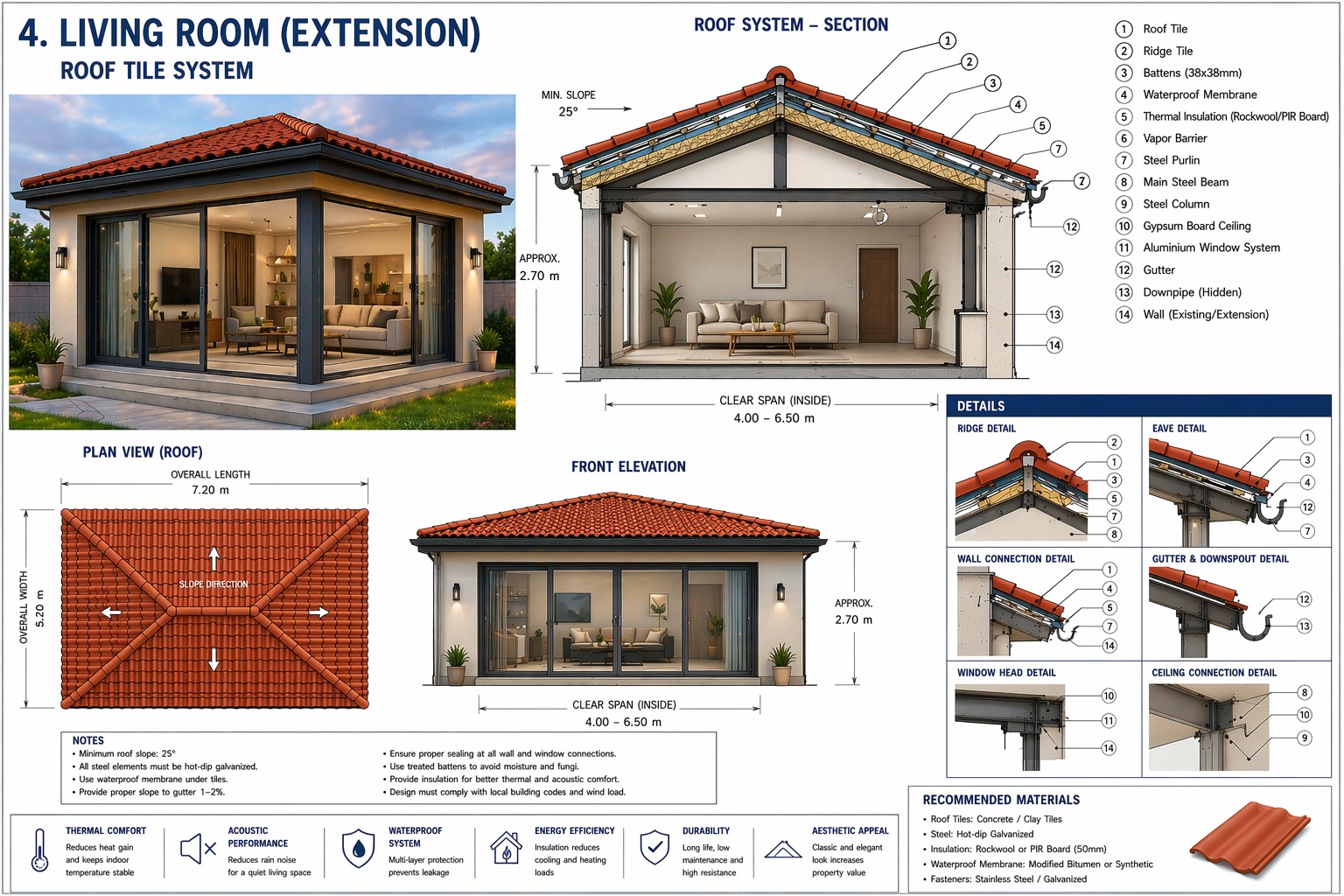
Living room

Realistic usage photos

Installation Tips (Step-by-Step)

🔩 1 Steel Structure

  • Must be:
    • Levelled precisely
    • Anti-corrosion treated (hot-dip galvanized preferred)
  • Use end caps (plugs) for hollow sections:
    • Prevent water ingress
    • Prevent internal rust
    • Prevent insect accumulation


🧱 2 Waterproofing Layer

  • Install before battens
  • Ensure:
    • No punctures
    • Proper overlaps
    • Full coverage of slopes and edges


🪵 3 Battens System

  • Use:
    • Treated timber OR galvanized steel battens
  • Must follow:
    • Exact tile spacing requirements
    • Perfect alignment


🧱 4 Roof Tile Installation

  • Mechanical fixing is mandatory:
    • Screws or clips (especially on edges)
  • Ensure:
    • Proper overlap system
    • No misalignment
    • Strong fixing at wind zones


🧱 5 Interior Ceiling Integration (Important for Living Rooms)

  • Recommended system:
    • Gypsum board suspended ceiling
  • Space between roof and ceiling used for:
    • Insulation layer
    • Electrical wiring
    • Air gap for thermal control

✔ Benefit:
Clean interior finish + hidden technical layers


💧 6 Drainage System

  • Install gutters with correct slope (1–2%)
  • Ensure water is directed away from façade
  • Prefer:
    • Hidden gutters for modern design
    • Or aluminum external gutters for maintenance access


⚠️  Common Mistakes to Avoid

  • ❌ Weak insulation or no insulation
  • ❌ Missing vapor barrier layer
  • ❌ Poor waterproof membrane installation
  • ❌ No mechanical fixing in windy areas
  • ❌ Using untreated timber or non-galvanized steel
  • ❌ Ignoring acoustic performance (causes rain noise issues)
  • ❌ Poor integration with interior ceiling system

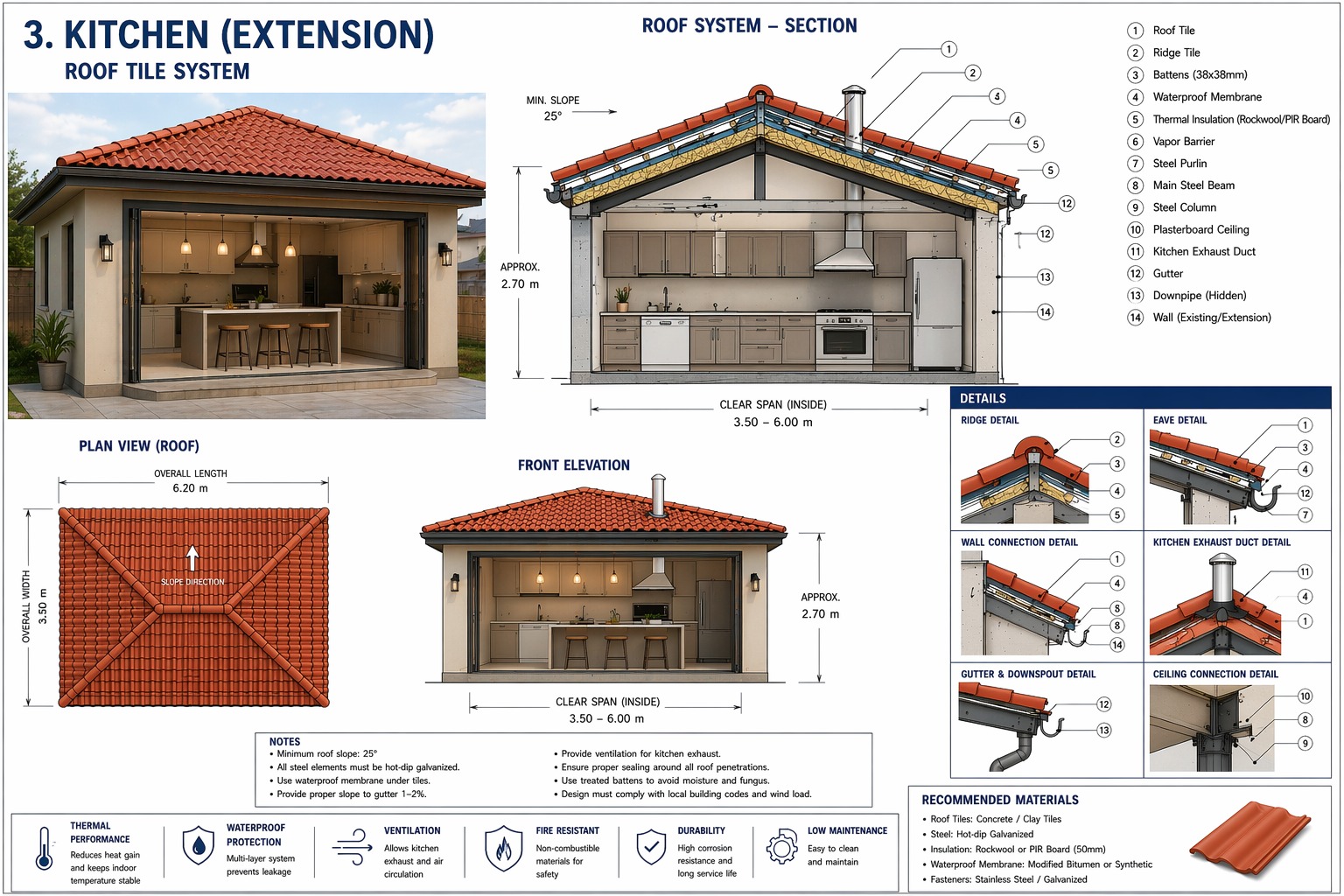
Kitchen

Realistic usage photos

 Installation Tips

🔩 1 Steel Structure

  • Must be:
    • Galvanized or anti-corrosion treated
  • Use treated hollow tubes with end caps (plugs)
    • Prevent internal rust 
    • Prevent insects and water entry


🧱 2 Vapor Barrier Installation

  • Installed directly above structure
  • Must be continuous without gaps
  • Critical in kitchens to stop steam penetration


🧱 3 Waterproofing Layer

  • Installed before battens
  • Proper overlaps and sealing required


🪵 4 Battens

  • Use:
    • Treated timber OR galvanized steel
  • Must be resistant to humidity


🧱 5 Roof Tile Installation

  • Fix tiles mechanically (screws/clips)
  • Ensure:
    • Proper overlap
    • Tight installation
    • Strong fixing at edges


💨 6 Exhaust & Openings (Very Important)

  • Install metal duct outlet for kitchen hood
  • Use:
    • Flashing system around duct
    • Waterproof sealing (PU or silicone)

✔ Mistake to avoid:

  • Leaving duct  → causes leakage


💧 7 Drainage System

  • Install gutters with proper slope (1–2%)
  • Ensure water is directed away from kitchen walls

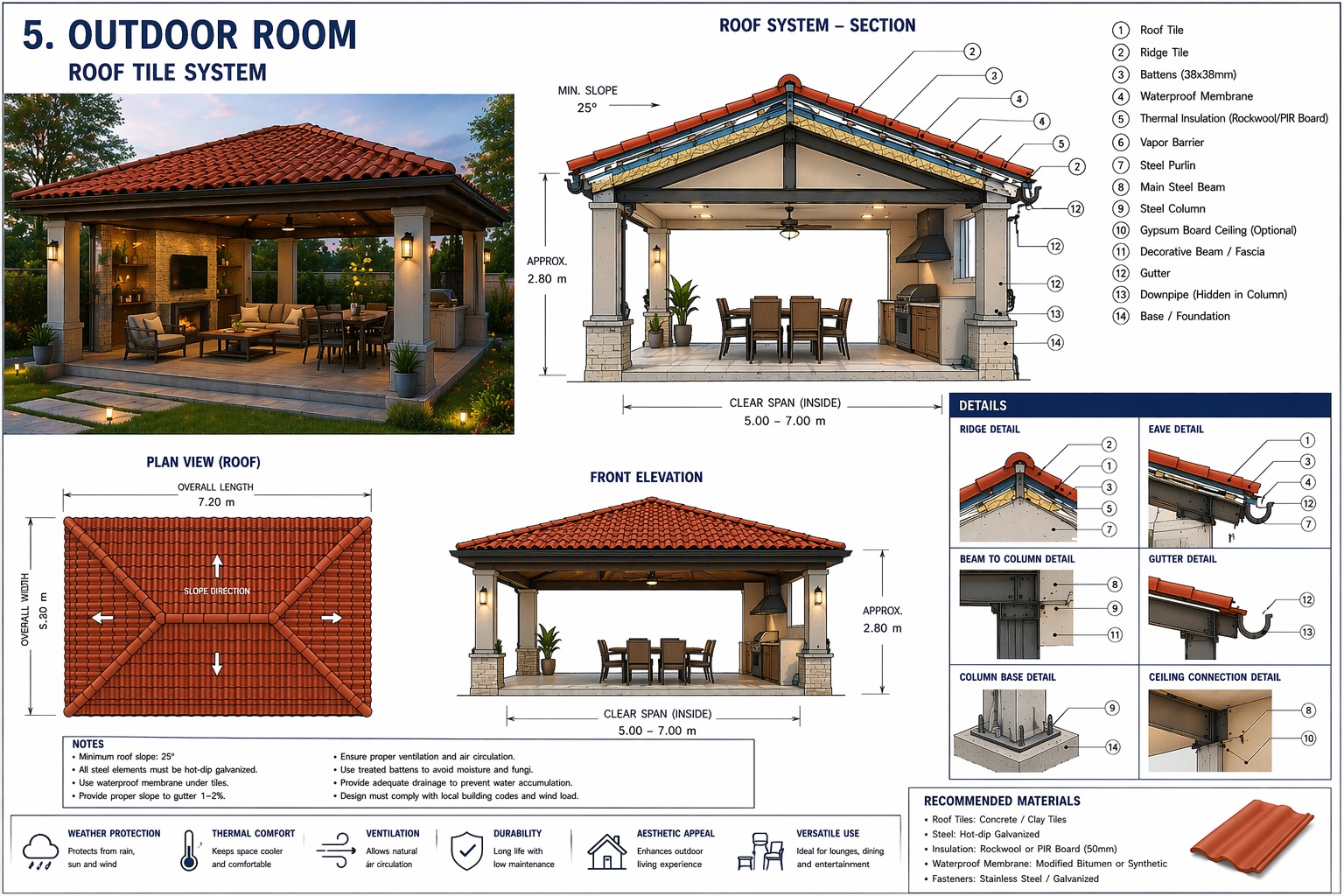
outdoor room

Realistic usage photos

🛠️  Installation Tips

🔩 1 Steel Structure

  • Must be:
    • Fully galvanized
  • Use hollow tubes with end caps (plugs)
    • Prevent water & corrosion
  • Ensure perfect leveling


🧱 2 Alucobond Installation

  • Install aluminum subframe first
  • Fix panels with:
    • Rivets or hidden fixing system
  • Leave expansion gaps
  • Seal joints properly


🧱 3 Waterproofing

  • Install before battens
  • Extend membrane toward wall connection areas

✔ Critical:
Membrane must connect with wall sealing system


🪵 2.4 Battens

  • Use:
    • Treated timber OR galvanized steel
  • Align precisely with tile layout


🧱 5 Roof Tiles

  • Fix mechanically (clips/screws)
  • Increase fixing at edges
  • Ensure proper overlap


🪟 6 Aluminum Integration (Very Critical)

  • Install aluminum after:
    1. Structure
    2. Waterproofing
    3. Roof completion
  • Use:
    • Flashing between roof and aluminum
    • EPDM tape + PU sealant

✔ Avoid:

  • Direct water flow toward windows


💧7 Gutters

  • Install with correct slope
  • Ensure strong fixing
  • Add leaf guards if needed

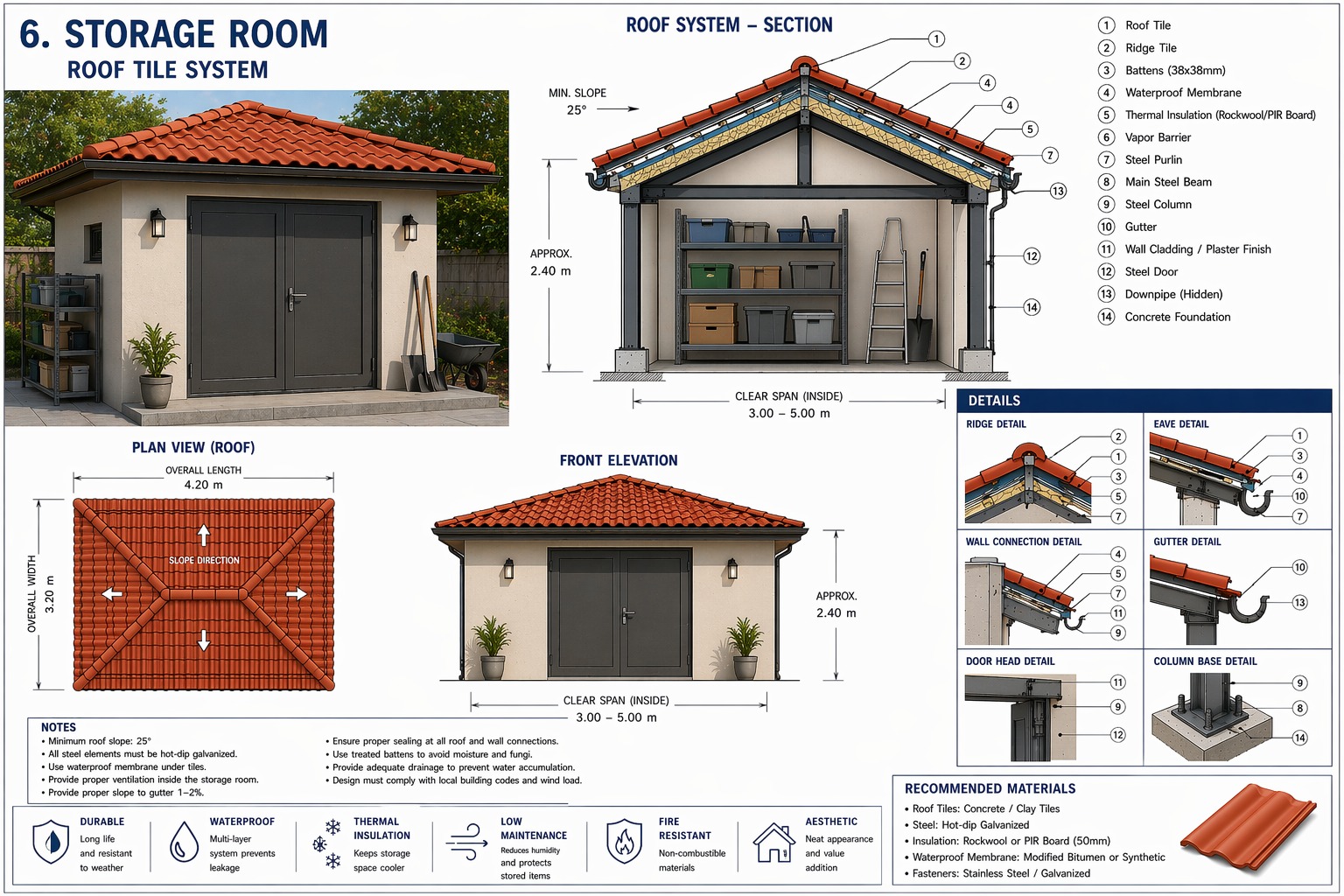
Storage / service room

Realistic usage photos

🛠️ Installation Tips

  • Install waterproof membrane before battens
  • Use corrosion-resistant fasteners
  • Mechanically fasten roof tiles at edges and exposed zones
  • Install ridge closures to prevent water and pest intrusion
  • Provide ventilation openings to reduce humidity
  • Seal roof penetrations carefully

All exposed metal accessories must be corrosion-resistant.


⚠️ Common mistakes to avoid

  • Using untreated steel
  • No gutter system
  • Low roof slope
  • Poor side closures
  • No ventilation

Home entrance

Realistic usage photos

🛠️ Installation Tips

  • Ensure perfect alignment of battens and tiles
  • Install flashing where roof meets wall
  • Use concealed or decorative gutter system
  • Fix all edge tiles mechanically
  • Seal all wall junctions with waterproof flashing

Because the entrance is a highly visible area, edge detailing quality is critical.


⚠️ Common mistakes to avoid

  • Misaligned tile rows
  • Visible unfinished flashing
  • Weak gutter design
  • Poor wall sealing

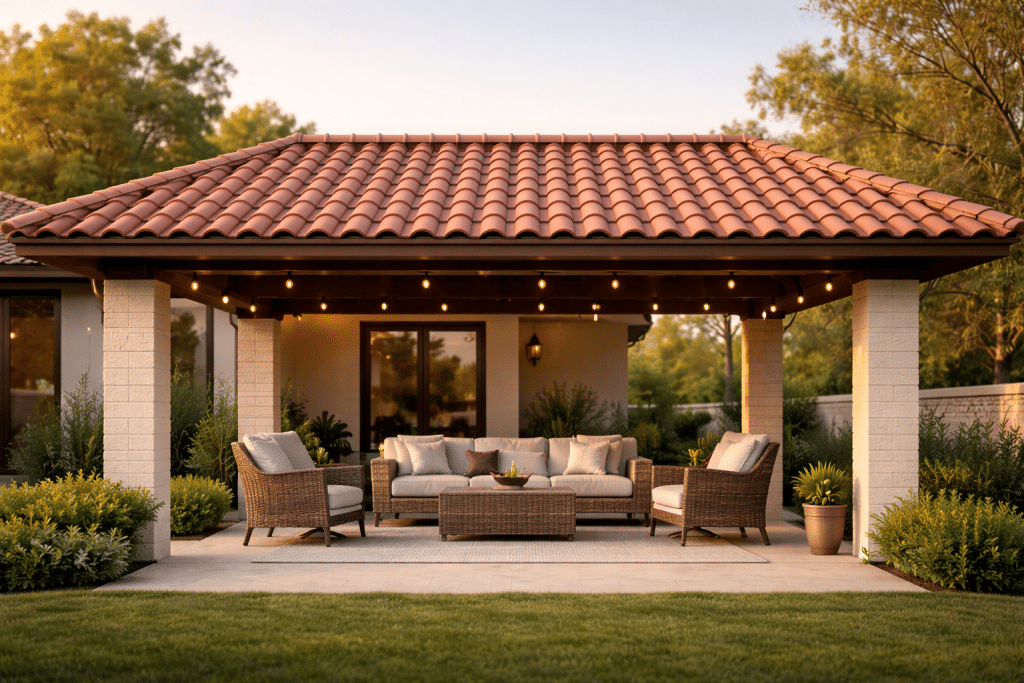
Outdoor seating area

Realistic usage photos

🛠️ Installation Tips

  • Fix tiles mechanically in all wind-exposed areas
  • Use treated structural components
  • Seal ridge and edge areas
  • Install gutters to protect the seating area
  • Use end caps for hollow tubes

Outdoor structures experience high wind pressure, so mechanical fixing is mandatory.


⚠️ Common mistakes to avoid

  • No gutter installation
  • Untreated steel sections
  • Poor wind fixing
  • No edge closures

other uses

Realistic usage photos

Get A Quote